Laboratories
Community Health Nursing Laboratory
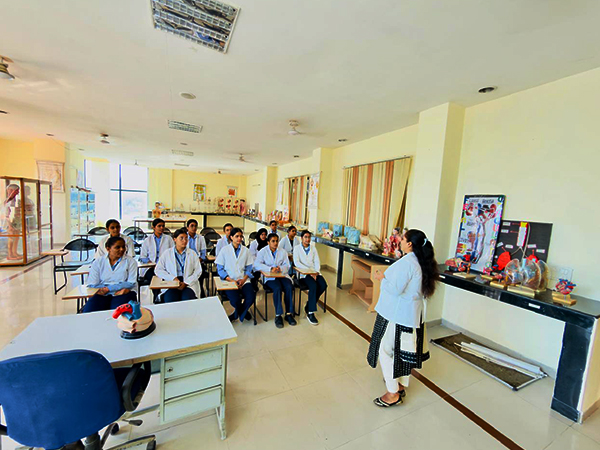
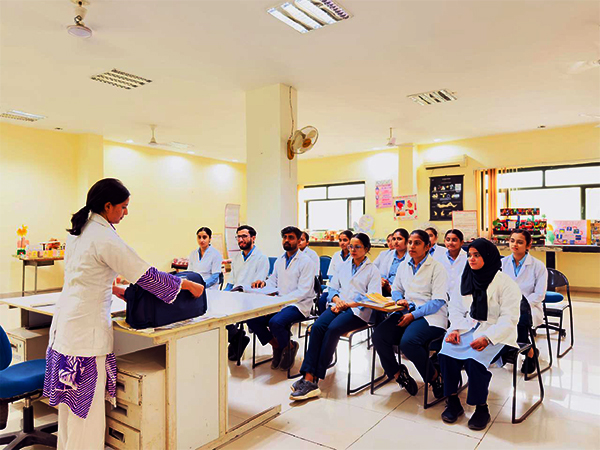
The Community Health Nursing (CHN) Laboratory is designed to provide students with practical experience and essential skills required for delivering effective health care services at the community level. The lab is equipped with models, charts, audio-visual aids, and community health kits that help students learn about family assessment, home visiting techniques, and health education methods.
Here, students practice procedures such as:
- Preparation and use of community health bags
- Demonstration of personal hygiene and environmental sanitation
- Maternal and child health care practices
- Immunization techniques and family welfare services
- Health assessment of individuals, families, and communities
The CHN laboratory also serves as a resource center where students develop skills in communication, health teaching, record keeping, and community survey techniques. By simulating real-life situations, the lab prepares nursing students to provide comprehensive, preventive, promotive, and rehabilitative care to families and communities.
Our well-structured CHN lab ensures that students gain confidence before applying their knowledge and skills in the field, thus bridging the gap between classroom learning and community practice.
Fundamentals of Nursing Laboratory
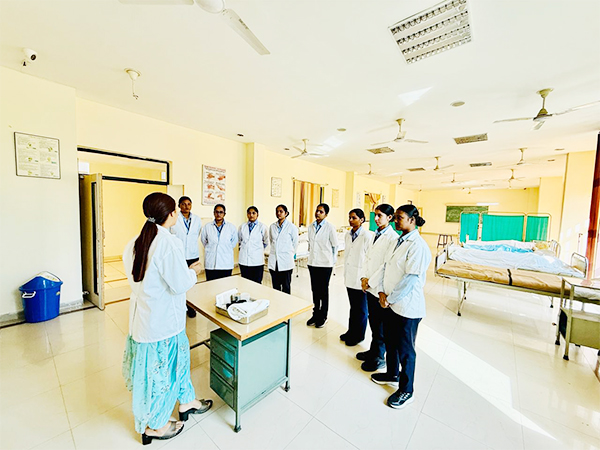
In this laboratory, students practice and master the basic nursing procedures such as:
- Hand hygiene and infection control practices
- Bed-making and patient positioning
- Vital signs assessment (pulse, respiration, temperature, blood pressure)
- Basic nursing care procedures (feeding, bathing, oral care, elimination needs)
- Administration of medications through various routes (demonstration)
- First aid and emergency care skills
By integrating theoretical knowledge with practical training, the Fundamentals of Nursing Laboratory prepares students to provide safe, effective, and holistic nursing care to patients in hospitals and communities. Fundamentals of Nursing Laboratory
Child Health Nursing Laboratory
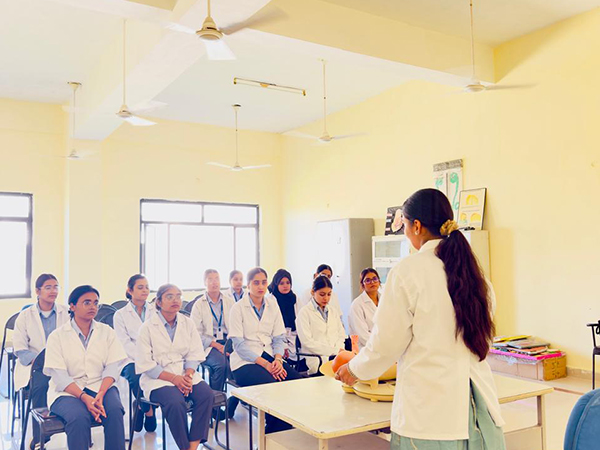
The Child Health Nursing Laboratory is designed to provide hands-on training in the care of infants, children, and adolescents. The lab is equipped with mannequins, paediatric models, growth charts, immunization kits, play therapy materials, and audio-visual aids to help students develop essential skills in paediatric nursing.
Students are trained in areas such as:
- Growth and development assessment of children
- Paediatric vital signs monitoring and physical examination
- Immunization techniques and child health assessment
- Paediatric procedures such as feeding, bathing, and medication administration
- Care of sick children and management of common childhood illnesses
- Health education for mothers and families regarding nutrition, hygiene, and immunization
- Use of play therapy for holistic child care
The laboratory provides a simulated environment where students can practice with confidence before providing care in hospitals and community health settings. By integrating knowledge, skills, and compassion, the Child Health Nursing Laboratory prepares future nurses to deliver safe, effective, and family-centered care to children.
Obstetrics and Gynaecology Nursing Laboratory
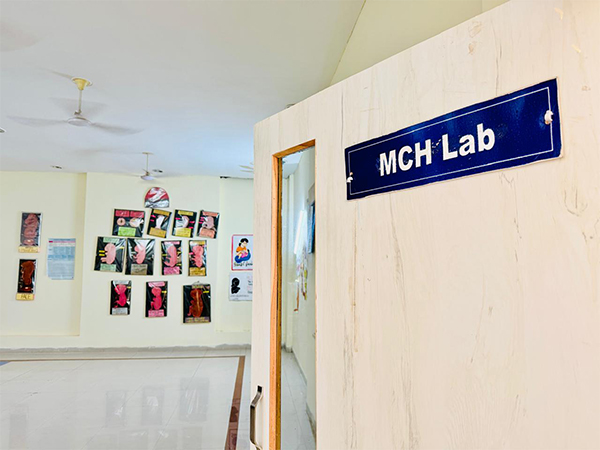
The Obstetrics and Gynaecology (OBG) Nursing Laboratory is established to provide students with practical knowledge and clinical skills related to maternal and women's health care. The lab is equipped with maternal and neonatal mannequins, birthing simulators, models of reproductive organs, antenatal kits, charts, and audio-visual aids that create a hospital-like learning environment.
In this laboratory, students gain hands-on training in:
- Antenatal and postnatal assessment
- Conducting normal deliveries on simulators
- Care of mother and newborn immediately after birth
- Assisting in obstetrical and gynaecological procedures
- Demonstration of family planning methods and counselling techniques
- Identification and management of common gynaecological conditions
- Health education for women on nutrition, hygiene, immunization, and reproductive health
The OBG Nursing Laboratory helps students integrate theory with practice, develop confidence in handling obstetric and gynaecological cases, and cultivate the skills necessary to provide comprehensive, safe, and compassionate care to mothers, newborns, and women across the lifespan.
Audio-Visual Aids (AV Aids) Laboratory
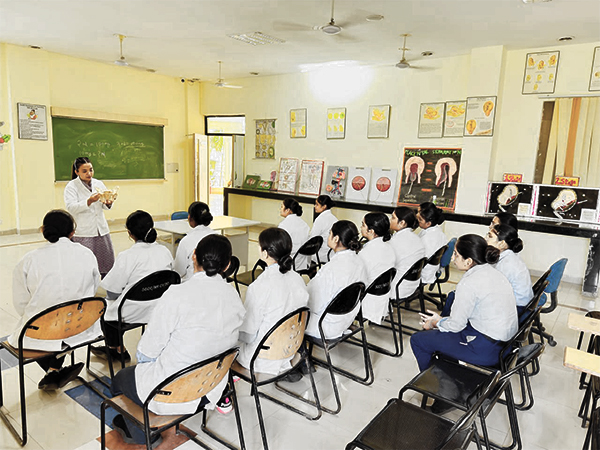
The Audio-Visual Aids (AV Aids) Laboratory is established to enhance the teaching–learning process in nursing education. The lab is equipped with modern teaching aids such as LCD projectors, overhead projectors, televisions, computers, charts, models, posters, flash cards, puppets, boards, and other instructional materials that help students develop effective communication and teaching skills.
In this laboratory, students learn to:
- Prepare and use different types of audio-visual aids
- Design health education materials for individuals, families, and communities
- Practice effective presentation and teaching methods
- Integrate innovative techniques for health promotion and patient education
The AV Aids Laboratory provides a creative environment where nursing students develop confidence in communication, teaching, and counseling, which are essential skills for professional nursing practice. It also prepares them to deliver effective health education during community postings, clinical practice, and professional presentations.
Nutrition Laboratory
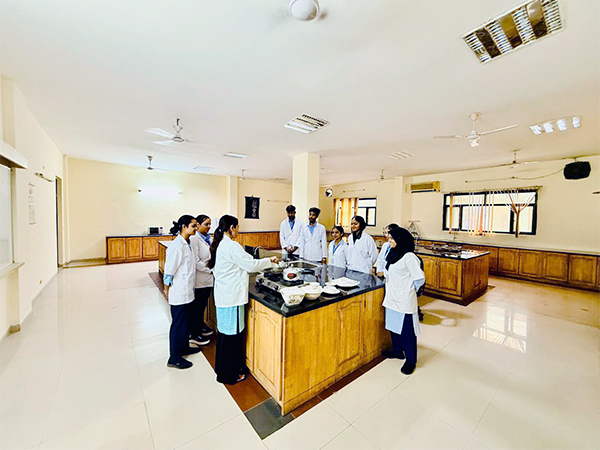
The Nutrition Laboratory is designed to provide nursing students with practical knowledge and skills related to dietetics and therapeutic nutrition. The lab is equipped with modern kitchen facilities, cooking utensils, weighing scales, charts, models, and audio-visual aids, enabling students to learn the scientific preparation of nutritious meals.
In this laboratory, students are trained to:
- Plan and prepare balanced diets for different age groups
- Modify diets for patients with specific health conditions (e.g., diabetes, hypertension, malnutrition)
- Demonstrate hygienic food preparation and storage practices
- Provide diet counseling and nutrition education in community and clinical settings
The Nutrition Laboratory bridges theory with practice, allowing students to gain confidence in diet planning, therapeutic nutrition, and health education. It prepares future nurses to promote healthy eating habits and dietary care for patients, families, and communities.
Computer Lab
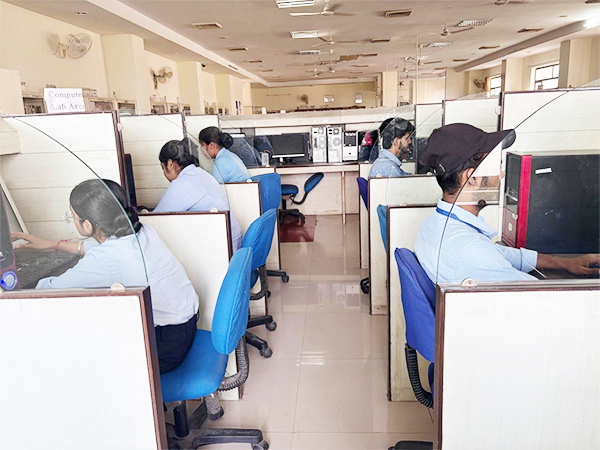
- Develop basic understanding of the uses of computer and its application in nursing. The objective is to enhance the possibility of our nursing students in succeeding with their work.
- The other objective is for our students to carry out the researches of their projects.
- Our computer lab is equipped with sufficient computer system.
Anatomy Laboratory
- Anatomy laboratory in nursing focuses on understanding the structure and functions of the human body includes study organs, tissues and system like digestive system, respiratory system, cardiovascular system. Lab often involve examine models and human skeleton system
- Overall anatomy physiology laboratory build the strong foundation for nursing by linking theoretical knowledge with practical skills needed in patient care.